


- Details
- Hits: 3976
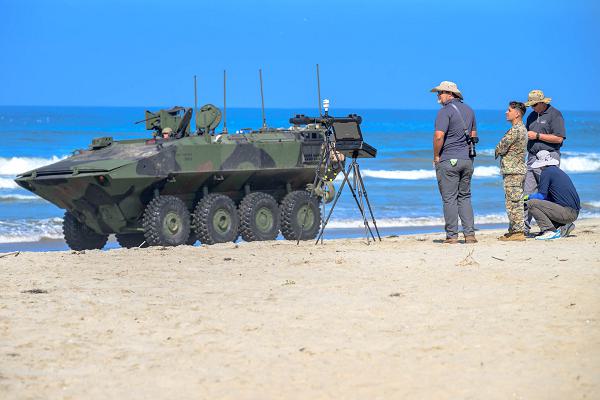
Oceanside, California. (March 12, 2025): When surfers “check out” the waves, it is for entertainment. For the Marines, knowing exact beach conditions can be a matter of life and death. In this photo by Michael Walls, scientists from the Naval Research Laboratory’s Ocean Science Division and Global TechSolutions demonstrate the new Marine Corps Surf Observation Tool (SUROB).
During the massive amphibious assaults in World War II, the Marines encountered unexpected wave conditions, currents, and man-made obstructions. Landing craft were thrown off course, capsized, or were trapped on hidden reefs resulting in high casualties. The only option then to obtain beach conditions was by dispatching special operations troops on extremely dangerous missions to check for uncharted reefs or man-made obstacles. Unfortunately, it took hours to gather this information and get it to decision-makers aboard ships.
Instead of hours, today’s commanders can receive vital information in real time. The SUROB system consists of an unmanned waterborne vehicle and a drone that can hover over the beach to take imagery. Combined with surface measurements, the system presents a comprehensive picture of the landing zone.
- Details
- Hits: 4683
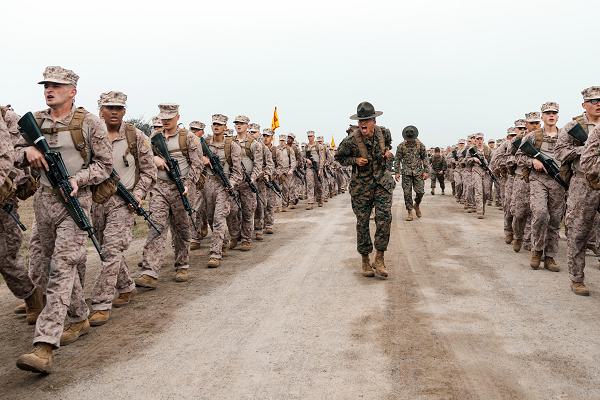
San Diego, California. (March 11, 2025): In this photo by Lance Corporal Janell B. Alvarez, Sergeant Angel Felix, a drill instructor, recites Marine Corps knowledge to recruits during a 2-kilometer introduction hike at the Marine Corps Recruit Depot. For these Marines, the marching has just begun. Before their training is over, these recruits will have marched hundreds of miles in a series of progressively longer hikes.
But why all the marching?
- Details
- Hits: 3142
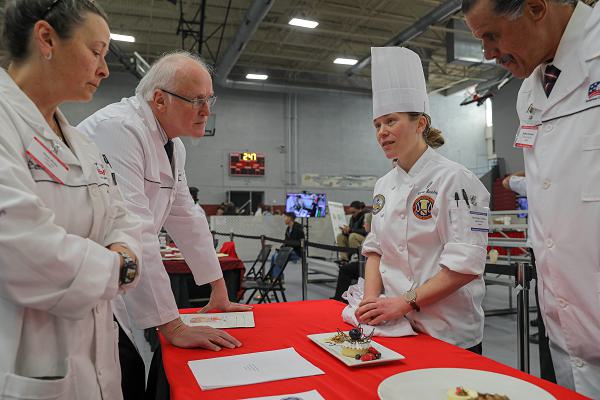
Fort Gregg-Adams, Virginia. (March 3, 2025): In militaries down through the centuries, the most persistent complaint from the troops has always about the chow. American commanders are keenly aware of how the quality and quantity of food effects morale and unit performance. That is why they strive to make American servicemembers the envy of every other military in the world when it comes to cuisine.
In this photo by Calvin Reimold, Chief Warrant Officer 2 Christine Stanley listens to judges during a pastry event at the Army’s 49th Joint Culinary Training Exercise. This is the Army’s largest culinary competition among military chefs from all branches of the U.S. Armed Forces. International teams representing France, the United Kingdom, and Germany also competed in the American-led exercise.
- Details
- Hits: 9455
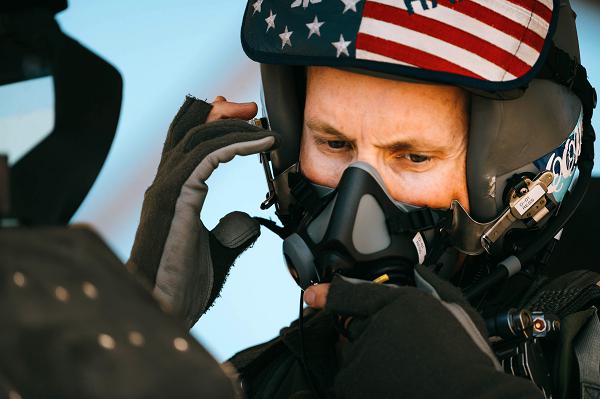
Luke Air Force Base, Arizona. (March 10, 2025): After forty-two years of reliable service, the Air Force is beginning to retire its aging F-16 jet fighters to prepare for a new generation of attack aircraft. In this photo by Senior Airman Katelynn Jackson, Lieutenant Colonel Michael Ress, commander of the 309th Fighter Squadron, fastens his oxygen mask as he readies to captain his F-16 Fighting Falcon for its final flight. While the 56th Fighter Wing will continue to support the F-16 for international partners, the wing is switching its focus to the latest fifth-generation fighter, the F-35A Lightning II.
Nicknamed the “Viper,” the F-16 made its first flight in 1974 and entered service in 1988 as the first all-day/all-weather fighter with night capability. Produced by General Dynamics and Lockheed Martin, the F-16s were revolutionary due to their “fly by wire” technology which used computers to assist pilots for first time. The new technology gave American pilots the edge in dogfights against the nimble Soviet MIG series of jets. The term “Viper” comes from its resemblance to the snake design of the Colonial Viper starfighter from the television series Battlestar Galactica.
- Details
- Hits: 2200

Mobile, Alabama. (March 13, 2025): When people think of Mardi Gras, visions of parades down Bourbon Street in New Orleans come immediately to mind. What most Americans don’t realize is Mobile, Alabama has an even longer history of celebrating this pagan event. In this photo by Petty Officer 1st Class Sophie A. Pinkham, Command Master Chief Petty Officer Brian Barrineau-Juhas and Petty Officer 2nd Class Aboudoulaye Ibrahim participate in a floral parade through downtown Mobile as part of their Mardi Gras celebration.
The Sailors are assigned to the guided-missile destroyer USS McFaul which arrived in Mobile for a scheduled port visit in conjunction with the city’s 2025 Mardi Gras celebration. Local citizens rolled out a red-carpet welcome for the troops including community outreach events and numerous opportunities to meet and interact with Sailors from the McFaul.
- Details
- Hits: 1792
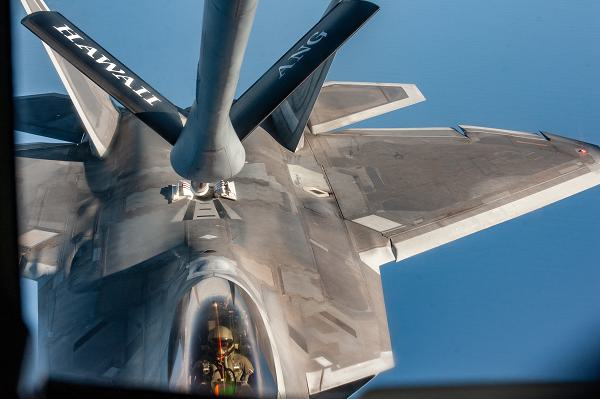
Pear Harbor, Hawaii. (March 5, 2025): What is it like to maneuver a jet at three hundred miles an hour to within sixty feet of a giant flying gas station? For American pilots, it is routine. In this photo by Senior Airman Roann Gatdula, an Air Force KC-135 Stratotanker assigned to the 203rd Air Refueling Squadron refuels an F-22A Raptor as they participate in Sentry Aloha 25-1. Staged annually by the Hawaii Air National Guard, the exercise involved 800 joint services personnel and thirty aircraft from six states.
The giant gas station is the KC-135, manufactured by the Boeing Company, which can fly fifteen hundred miles carrying up to 200,000 pounds of highly explosive jet fuel. The KC-135 dispenses fuel using either a fixed boom or an extended cable with a probe and a drogue to connect to receiving aircraft. There are approximately 390 of these refueling workhorses that enable U.S. planes to remain aloft almost indefinitely.